
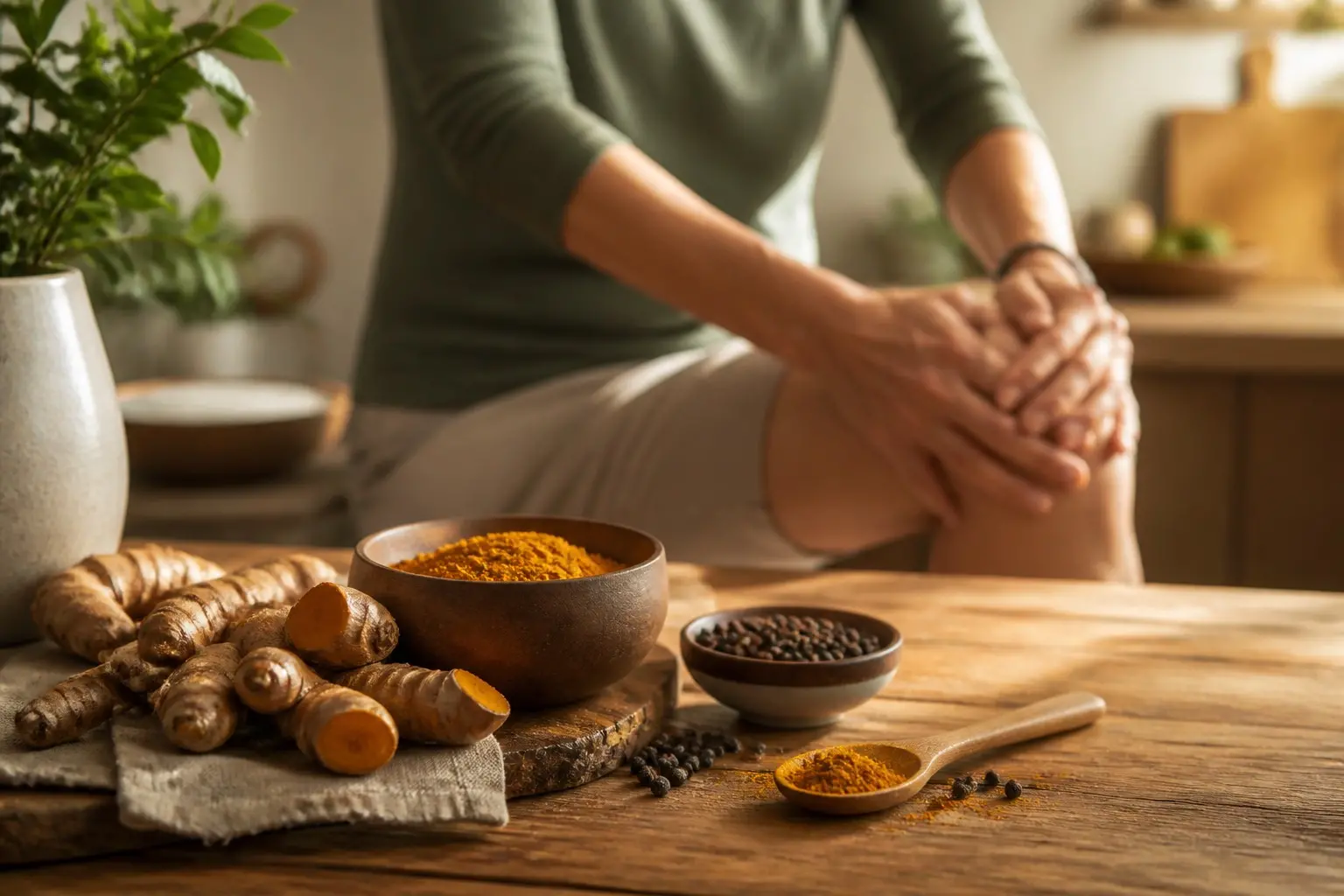
Turmeric’s Secret Weapon How Curcumin Tells Your Aching Joints to Chill.
In the grand, bustling library of ancient remedies, some books are read more often than others. Tucked away on a prominent shelf, bound in the brilliant ochre of a sunset, is the story of turmeric. For millennia, this vibrant rhizome has been more than a spice; it has been a pigment, a sacred offering, and a cornerstone of Ayurvedic and traditional Chinese medicine. But to the modern world, it holds a different kind of promise, a whispered secret that science is only now learning to translate: a molecule with the power to tell our body’s roaring fires to calm down.
We all know the fire. It’s the dull, persistent throb in a knee after a long run, the stiff reluctance of fingers in the morning, the protest of a lower back that has carried too much for too long. This is the slow burn of chronic inflammation—a biological process that, in an acute sense, is our body’s loyal firefighter. When you sprain an ankle, inflammation rushes to the scene, a well-meaning riot of immune cells and chemical signals meant to protect and rebuild. The problem arises when the firefighters never go home. They linger, mistaking creaky cartilage for a perpetual five-alarm blaze, and their efforts start to do more harm than good. They become a noisy, destructive mob in the delicate architecture of our joints.
This is where the story pivots from ancient wisdom to molecular espionage. The protagonist is curcumin, the main active compound in turmeric. It’s what gives the spice its impossible color and much of its reputed power. But curcumin isn’t a blunt instrument; it doesn't just crash the inflammatory party. It’s a master negotiator, a chemical whisperer that slips past the guards and speaks directly to the generals of inflammation.
Imagine your body’s inflammatory response is orchestrated by a central command center deep within your cells. One of the chief commanders is a protein complex with a suitably dramatic name: Nuclear Factor-kappa B, or NF-κB. Think of NF-κB as a hyper-vigilant military general. When it senses trouble—injury, infection, stress—it sounds the alarm, activating genes that produce a cascade of inflammatory chemicals like cytokines and enzymes. In a healthy system, this general stands down once the threat is neutralized. In chronic conditions like arthritis, however, the general is stuck on high alert, perpetually broadcasting battle orders. The result is a joint under constant, friendly-fire siege.
Curcumin executes its mission with startling elegance. It doesn't fight the army; it calms the general. By interacting with a series of cellular pathways, curcumin effectively tells NF-κB to stand down. It persuades the command center that the crisis has passed, that it’s time to call off the troops. The relentless production of inflammatory molecules slows, the cellular shouting subsides, and the joint’s beleaguered tissues get a moment of peace—a chance to finally begin repairs without being under constant assault.
This molecular diplomacy is what makes the science so compelling. Curcumin isn’t just masking pain like a typical anti-inflammatory drug. It’s intervening at a more fundamental, upstream level of the process. It’s rewriting the orders before they are even sent out.
But here, our story encounters a classic plot twist: the problem of bioavailability. Curcumin, for all its molecular cunning, is notoriously difficult for the body to absorb. Consumed in its raw form, most of it passes straight through our digestive system, its mission unrealized. This is the great challenge that has occupied researchers for decades. It’s why simply piling turmeric onto your food, while delicious, might not be enough to soothe an aching knee. It’s also why the wellness world is abuzz with new formulations designed to outsmart this problem. Scientists and supplement makers are now pairing curcumin with agents like piperine (the active compound in black pepper) or formulating it within fatty lipids, creating Trojan horses that can sneak the golden molecule past the gut’s defenses and into the bloodstream where it can work its magic.
This quest isn’t just about soothing the aches of an aging population. It’s a window into a profound shift in medicine—a move away from simply silencing symptoms and toward understanding the intricate cellular conversations that govern our health. The story of curcumin isn’t about a magic bullet. It’s about a molecule that has co-evolved with human culture, a piece of the natural world that reminds us that the answers to our modern ailments are sometimes written in an ancient language.
What began as a splash of color in a South Asian curry has become a subject of intense scientific scrutiny, a molecule that forces us to see the connection between a humble root and the complex, invisible biology of our own bodies. It invites us to consider that relief may not always come from a thunderous chemical declaration, but sometimes, from a quiet, molecular whisper that simply says: "Chill." It tells a story of exquisite biological elegance, reminding us that deep within the noise of our chronic pain, there are commanders who can be reasoned with, and fires that can be calmed, not just with force, but with wisdom.
Use Curiosity, Not Certainty
A plausible mechanism is not a personal diagnosis. Curcumin has attracted research interest, yet study designs, doses, formulations, and outcomes differ. Cooking with turmeric can be a flavorful part of a diet, while extracts and high-dose supplements raise separate questions about interactions, quality, and tolerability.
Joint pain also has many possible causes. New swelling, redness, fever, injury, weakness, or pain that persists should be assessed by a qualified professional rather than managed through a supplement alone. A clinician can help distinguish ordinary soreness from a condition that needs specific care.
Build a Wider Joint-Care Plan
For many people, a sustainable plan includes appropriate movement, rest, strength work, sleep, and treatment matched to the cause of pain. If someone wants to try a turmeric or curcumin supplement, they should first discuss it with a pharmacist or clinician—especially when taking blood thinners, managing gallbladder or liver conditions, or preparing for surgery.