
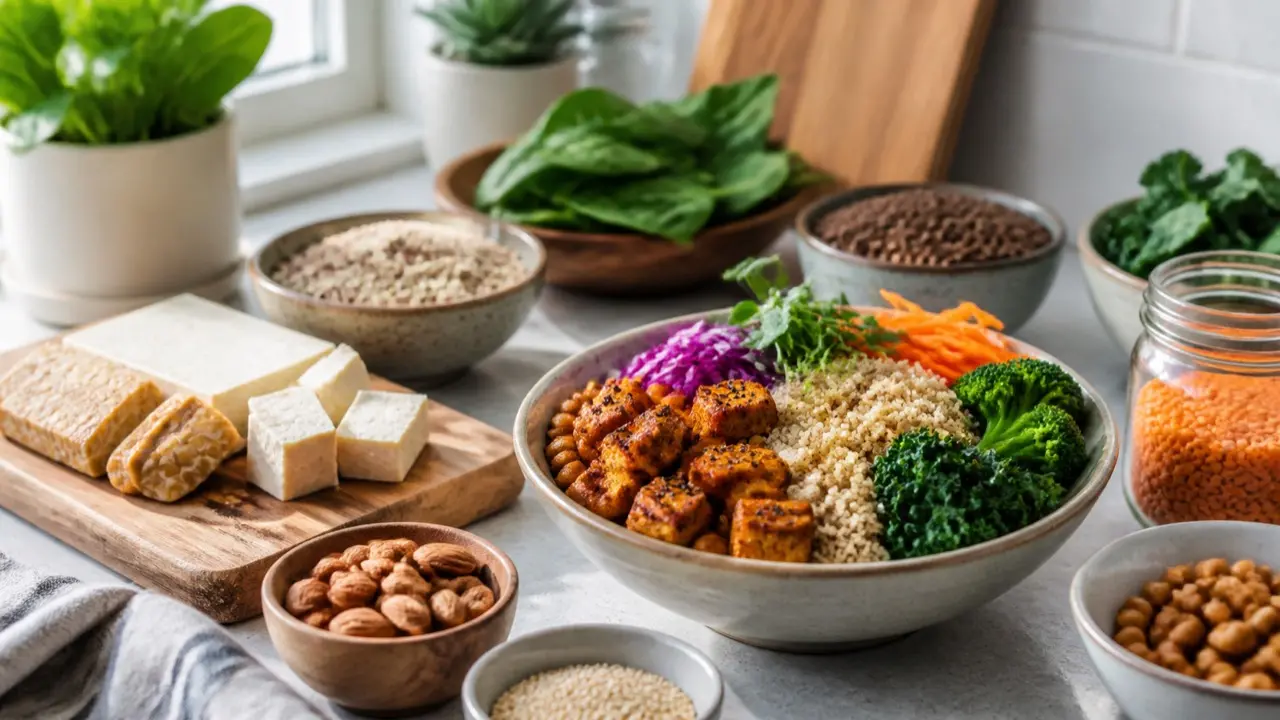
Comparing Protein Sources by Practical Fit
Compare plant-based high-protein meals by reported grams per stated serving first, then weigh ingredients, cost, preparation, dietary fit, and convenience.
One roundup says meals built around whole grains, legumes, tofu, tempeh, and seitan can provide 20–30 grams of protein [1]. That is a general range, not verified nutrition data for each recipe. A second source reports 16–36 grams per serving across its quantified recipes [2].
Serving definitions vary. Protein may be listed for one sandwich, one plated portion, or part of a recipe serving several people. Grilled Rosemary Tempeh Flatbread, for example, is reported at 23–35 grams per serving depending on whether it is divided among four or six people [2].
All recipe-level figures below are author-reported, not independently tested or standardized [2]. Prices, commercial terms, and service policies were not verified by the supplied research [1][2].
Best-fit descriptions are editorial guidance based on the disclosed ingredients and meal formats, not independently verified recommendations.
Crispy Chicken Caesar Salad has the highest reported total in the supplied research: 36 grams per serving from a two-serving recipe using Daring breaded chicken [2]. Vermicelli Noodle Bowl follows at 35 grams, while Skillet Nacho Dip reports 34 grams from pea protein-based ground and refried beans [2].
Other higher-protein choices include Macaroni Salad at 30 grams and Zuppa Toscana at 27 grams per serving. The soup figure assumes the recipe is divided into six servings [2].
These rankings do not account for portion weight, calories, price, or whether toppings and sides are included. A 35-gram serving is useful only if its stated portion resembles the amount someone will eat.
The 20–25-gram range offers more variety in ingredients and formats. Berry Chia Pudding, Apricot Glazed Tempeh, and Dirty Rice each report 25 grams per serving. One-Pot Hamburger Helper reports 24 grams, while Maple Mustard Tempeh reports 23 grams before counting quinoa [2].
Roasted Vegetable Pasta provides a reported 21 grams per serving when divided among three people. Masoor Dahl, Green Pea Pasta Salad, and Rainbow Taco Salad each report 20 grams [2].
Grilled Rosemary Tempeh Flatbread again shows why yield matters: its reported protein changes from 23 to 35 grams depending on whether the recipe makes six or four portions [2]. Compare the portion to be served, not only the largest number shown.
The three identified breakfast options vary from 16 to 25 grams. Tofu Avocado Breakfast Sandwich reports 16 grams per sandwich, Bananas and Cream Oatmeal reports 18 grams per serving, and Berry Chia Pudding reports 25 grams [2].
For lunch or dinner, the options include pasta salads, noodle bowls, soups, dahl, tempeh dishes, roasted vegetable pasta, Dirty Rice, and One-Pot Hamburger Helper [2]. Another roundup includes weeknight and one-pot recipes, but provides no extracted recipe-level protein totals [1].
Preparation also differs. Legume dishes require cooking, tofu and tempeh may need seasoning and preparation, and recipes using branded meat alternatives depend on product availability. Check the full recipe for equipment, preparation time, ingredients, and yield.
Neither source verifies ingredient prices, costs per serving, geographic availability, or delivery fees [1][2]. Calculate the cost of the ingredients actually used, including required sauces, toppings, and sides, then divide by the number of portions likely to be served.
- Add the cost of the amount used from each package rather than the full package price.
- Include required toppings, sauces, and sides.
- Divide the total by the realistic number of portions.
- Compare options using similar serving sizes and protein targets.
Current local prices are necessary before deciding whether recipes based on lentils, grains, tofu, tempeh, or packaged meat alternatives offer better value.
For dietary restrictions, Source [2] describes Baked Tofu as oil-free, gluten-free, and nut-free, but provides no protein total. That description is not an allergen guarantee. Check labels for every packaged ingredient and condiment because a vegan or plant-based label does not establish whether a meal is gluten-free, nut-free, soy-free, or otherwise suitable for a medical restriction.
The supplied sources compare recipes, not prepared-meal companies or subscription services [1][2]. They cannot support rankings based on price, shipping, menu limits, contracts, or cancellation policies.
Use these checks across any format:
- Set a protein minimum: Decide how many reported grams the meal should provide.
- Confirm the serving: Check portion size and recipe yield.
- Choose protein sources: Consider whether legumes, tofu, tempeh, seitan, grains, or meat alternatives fit the preference [1][2].
- Review ingredients: Screen allergens and other dietary concerns.
- Calculate actual cost: Divide ingredient or order costs, including shipping, by the portions likely to be eaten.
- Compare effort: Account for shopping, cooking, cleanup, reheating, and storage.
Standalone recipes have no meal-plan contract or cancellation policy. Prepared meals and subscriptions may reduce work, but their current price, minimum order, delivery area, recurring billing, skip rules, cancellation deadline, and refund policy must be checked with the provider.
Look for grams per serving and a defined yield rather than phrases such as “full of plant protein.” Mung Bean Soup, Lentil Salad, and Baked Tofu have no quantified protein figure in Source [2].
Also review whether totals include sides. Maple Mustard Tempeh reports 23 grams without quinoa, while Grilled Rosemary Tempeh Flatbread ranges from 23 to 35 grams based on portioning [2]. Source [1] provides only a general 20–30-gram range for meals built with protein-rich plant ingredients, not recipe-specific totals [1].
For a commercial service, check for shipping charges, portion weights, nutrition panels, recurring billing, skip deadlines, and cancellation instructions before ordering.
- The nutrition panel and serving size
- The total checkout price, including shipping
- The renewal schedule and skip deadline
- The required cancellation method
- The order or cancellation confirmation
- 30 Plant-Based High-Protein Dinners, Sarah Rotavera, Making Thyme for Health.
- 20 High-Protein Vegan Recipes (Filling and Delicious!), Timothy Pakron, Mississippi Vegan.
How to Use the Comparison in Real Life
A plant-based protein comparison is most useful when it starts with serving size, not with a single headline number. A meal that looks high in protein on paper may require a larger portion, a side dish, or a specific preparation method to feel satisfying. That is why the practical question is not only “How many grams are listed?” but also “Can I cook this regularly, afford the ingredients, and enjoy the texture?”
For everyday planning, it helps to pair one dense protein source with a supporting carbohydrate, vegetable, and fat source. Tofu, tempeh, seitan, beans, lentils, and whole grains can each play different roles depending on taste, dietary restrictions, sodium needs, gluten tolerance, and preparation time. The strongest option is usually the one that fits the person’s routine well enough to be repeated, not the one that wins a single nutrition comparison in isolation.