
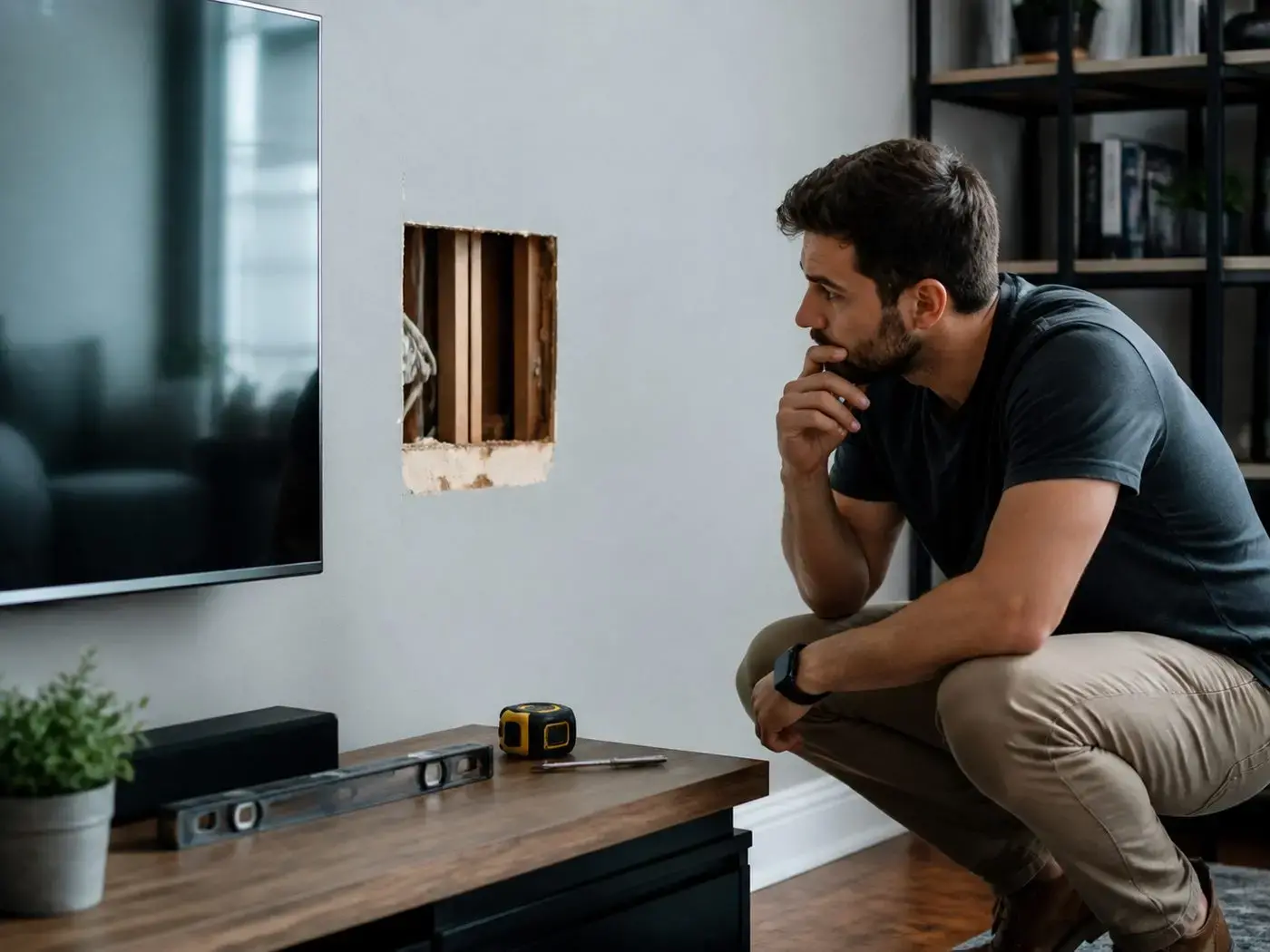
Why a perfectly fine TV setup can still bug you
A living-room TV can work fine on paper and still feel slightly off every night. You sit down, press play, and end up looking a little too high or too low. The stand takes more visual space than you expected. Cables peek out. None of it sounds major, but together it can make the room feel less calm and the screen less central.
That is why people start thinking about mounting. Not because the current setup fails, but because it keeps asking for small adjustments your room never quite solves. The catch is simple: a wall mount can clean this up, but only if it changes more than the TV’s location.
What actually changes when the screen leaves the stand
When the TV comes off the furniture, the room usually feels different before the picture does. The screen becomes its own fixed point instead of one more object sitting on top of another object. That changes how your eye reads the wall, how much attention the stand pulls, and how easy it is to place speakers, a soundbar, or a game console without everything stacking up in one spot.
The bigger shift is control. You set the screen where your seating needs it, not where the stand’s height forces it. In a room where the couch sits low, that can mean less chin-up viewing. In a room with a wide media console, it can simply mean the TV looks centered instead of perched.
What does not change is just as important. Mounting will not hide bad cable routing, fix glare, or make a cramped layout feel spacious on its own. Height is where the upgrade starts to earn its keep.
Is your viewing height quietly ruining movie nights?
You notice this most during a full movie, not a quick news segment. If the screen sits too high, your eyes keep lifting and your neck stays slightly tense. If it sits too low, you end up slouching or looking down past your natural line of sight. Neither problem feels dramatic at first. Two hours later, it does.
That is why height matters more than people expect. In most living rooms, the sweet spot is simple: when you sit in your usual seat, the middle of the screen should land close to eye level or a little below. A stand often pushes the TV higher or lower than that because it has to clear furniture shelves, decor, or a soundbar. The setup fits the cabinet, but not always your body.
There is a catch. Mounting too high is common, especially when people center the TV on the wall instead of centering it on the couch. Get this part right, and the room starts to feel easier to watch, which makes the space question matter a lot more.
The wall opens space, but does your room benefit?
You feel this when the stand is wide, the room is tight, or the area under the TV has turned into a holding zone for boxes, remotes, and decor. Once the screen moves to the wall, the furniture below often stops doing double duty. The room can look calmer simply because one large object no longer sits on another. In a narrow living room, that change is easy to notice from the doorway.
But extra space only helps if you can use it. If the media console still needs to stay for devices, storage, or a center speaker, mounting may clean up the sightline without really freeing the layout. In some rooms, the benefit is less floor space and more visual breathing room. That still counts. You just want to be honest about what is actually improving, because the cable path is usually where that cleaner look gets tested.
Cables, outlets, and the mess you’ll notice more
You see it right after the TV goes up: the screen looks cleaner, and the wires look worse. A setup that felt acceptable on a stand can suddenly show every dangling cord, low outlet, and power strip. If the outlet sits far to one side or near the floor, the cable run becomes the part your eye catches first.
This is where mounting either looks finished or half-done. If you can place the TV near an outlet, add a brush plate, or route cables neatly down to the console, the wall helps. If not, the install can trade one kind of clutter for another. Streaming-only setups have it easiest. Add a soundbar, game console, cable box, and ethernet, and the job gets more demanding fast.
It is also where costs creep in. Hiding wires well may mean extra hardware, an electrician, or opening drywall. Before you think about brackets and studs, it helps to know whether your wall can support the plan at all.
Can your wall handle it without turning complicated?
You usually find out what kind of project this is the moment you start looking for studs. If the TV wall is standard drywall over wood studs, a basic mount often stays pretty manageable. Measure carefully, hit the studs, match the bracket to your TV’s weight and size, and the job is mostly about patience. In that setup, the hard part is often placement, not strength.
The wall gets less simple when the spot you want does not line up with the studs, or when the surface is brick, plaster, metal studs, or drywall with no clear backing where the mount needs to land. Then the clean idea starts adding steps: different anchors, a wider mount, extra tools, patching, or a pro install. A fireplace wall can be especially awkward because height, heat, and stud layout can all work against you at once.
If your wall is straightforward, mounting feels like a weekend job. If the wall fights the plan, the smarter move is to decide whether the better viewing position is worth the extra work.
When mounting feels worth it and when it doesn’t
It usually feels worth it when the screen is clearly in the wrong place today and the wall lets you fix that in one move. If your TV sits too high on a tall console, if the stand eats up visual space, or if the room always looks busier than it should, mounting tends to pay off every time you sit down. You notice it in longer viewing first. The picture feels easier to watch, the wall looks cleaner, and the whole setup stops feeling stacked.
It often does not feel worth it when the current height is already comfortable and the room layout will barely change. If the console needs to stay, the cables still have nowhere good to go, and you are only chasing a slightly sleeker look, the upgrade can end up small compared with the work. That is especially true if your wall adds complexity or you rent and do not want patching, tools, and repair on the back end.
The useful test is simple: if mounting solves a daily annoyance, it earns its keep. If it mainly photographs better, pause and mock it up before you drill.
Seeing the upgrade before you commit to the holes
Pause before you drill and test the change at full size. Tape the TV’s outline on the wall, or cut a cardboard sheet to match it, then sit in your usual spot for a night or two. Check eye level, glare, how the console looks underneath, and whether the room actually feels calmer. This quick mockup catches bad height choices before they turn into patch jobs.
The useful shift is to judge mounting as a room decision, not a hardware decision. If the outline already makes the space feel easier to watch and easier to live in, the install will likely feel worth it. If the wall still raises doubts, that hesitation is useful too.