
In the frantic, modern theater of the "quick-fix" dinner, time is often viewed as the enemy of excellence. We have been conditioned to believe that depth of flavor is a product of duration—that a sauce must simmer for hours to find its soul, or that a protein must be coddled to achieve perfection. But there is a flaw in this slow-cooking dogma. In the realm of the sea scallop, time is not a luxury; it is a volatile chemical boundary. To master the scallop piccata in fifteen minutes is not a shortcut. It is a high-stakes exercise in thermodynamics, a brief window where heat, acidity, and protein collide to create something transcendent.
The sea scallop itself is a biological marvel—a massive adductor muscle designed for rapid-fire propulsion through the icy depths of the Atlantic. It is almost entirely lean protein and water, a structure that makes it both the darling of the culinary world and its most temperamental subject. If you overcook a brisket, you lose an afternoon; if you overcook a scallop by thirty seconds, you have transformed a silk-textured delicacy into a pencil eraser.
The Physics of the Sear
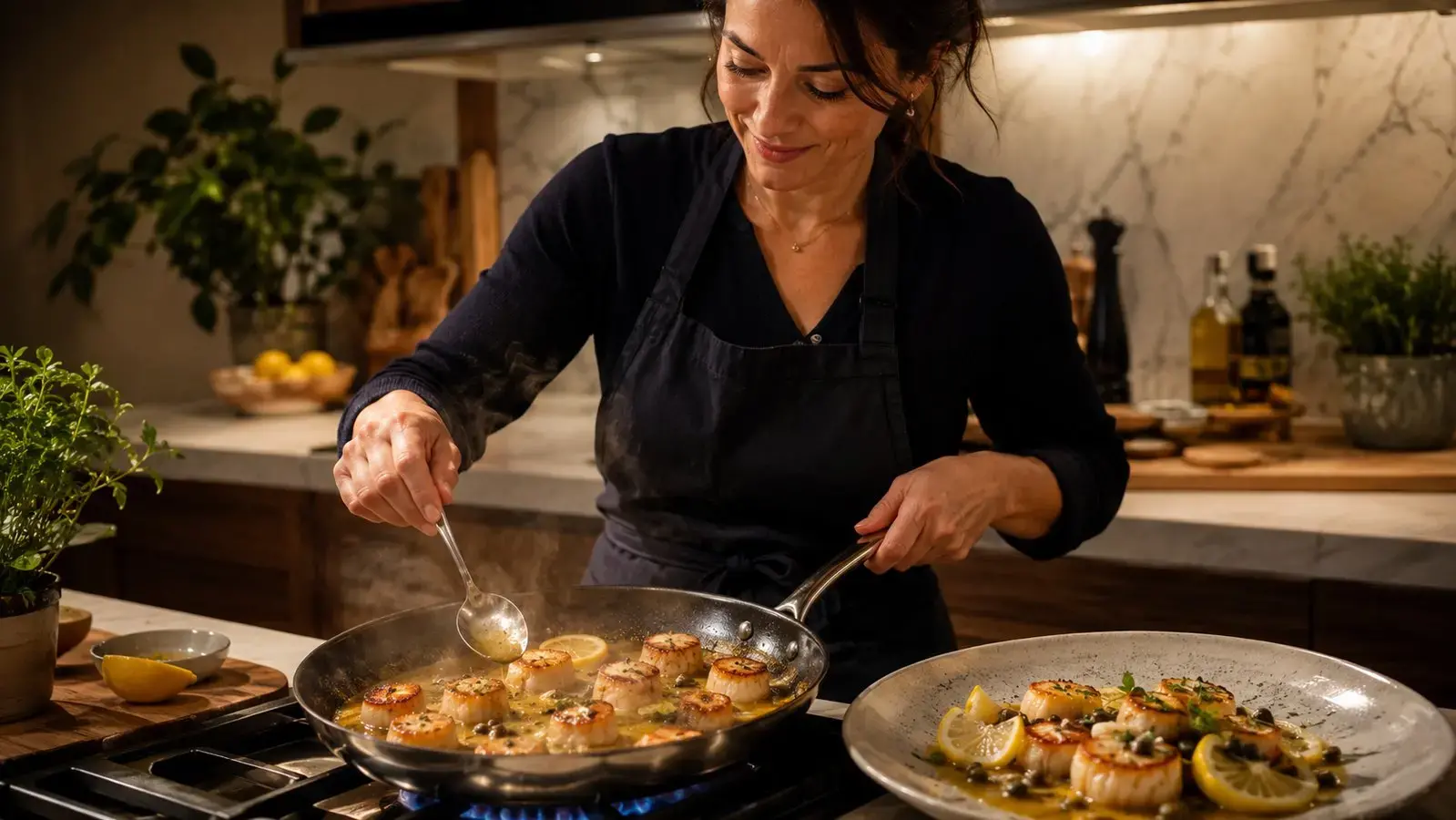
Consider the kitchen of Elena, a physicist with a penchant for the epicurean. For Elena, the preparation of scallop piccata isn’t just a meal; it’s a study in the Maillard reaction. This is the chemical process where amino acids and reducing sugars transform under intense heat, creating hundreds of flavor compounds and that distinctive, savory "crust."
"The pan is a particle accelerator," she says, hovering over a stainless steel skillet. To achieve the perfect piccata, the pan must be screamingly hot. When the cold scallop hits the shimmering oil, the surface moisture must evaporate instantly. If the pan is too cool, the scallop doesn't sear; it stews in its own juices, turning a ghostly, unappetizing gray. Elena waits for the precise moment the oil reaches its smoke point—a signal that the molecular dance is ready to begin. She drops the scallops in, and the kitchen fills with a rhythmic hiss, the sound of energy being transferred at a frantic pace.
The Piccata Pivot: A Lesson in Balance
While the scallops develop their golden armor, the narrative of the dish shifts from the intense heat of the forge to the delicate chemistry of the laboratory. Piccata, by definition, is a study in acidity. Traditionally an Italian preparation for veal, the transition to scallops requires a more nimble hand.
The components are deceptively simple: lemon juice, capers, butter, and white wine. But their interaction is complex. The lemon provides a sharp, bright "top note" that cuts through the richness of the scallop. The capers—briny, fermented flower buds—act as "flavor anchors," providing bursts of salt that wake up the palate.
In Elena’s kitchen, the transition happens in a heartbeat. The scallops are flipped—only once—to kiss the other side, then whisked onto a warm plate. They are at their peak: a crisp, caramelized exterior protecting a center that is barely opaque, sweet, and buttery. Now, the pan is a landscape of "fond," the brown bits of protein stuck to the bottom. This is liquid gold. She deglazes with a splash of dry wine, the steam carrying the scent of the sea and the vineyard into the air.
The Tension of the Emulsion
The climax of the 15-minute masterclass is the monter au beurre—finishing with butter. This is where many home cooks falter. If you add the butter too early or over high heat, the fat separates, leaving you with an oily mess. If you add it too late, it won't emulsify.
The goal is a "beurre blanc" style integration. Elena removes the pan from the heat and whisks in cold cubes of butter. The residual heat is just enough to melt the fat while the milk solids suspend in the wine and lemon reduction. The result is a sauce that is velvety, opaque, and shimmering—a perfect coat for the pearlescent scallops.
The tension here lies in the fragility of the emulsion. It is a metaphor for the dish itself: a delicate balance of extremes. Too much acid and the dish is shrill; too much butter and it is heavy. But when the balance is struck, the result is a flavor profile that feels both ancient and immediate.
The Philosophical Plate
Why does the 15-minute scallop piccata matter? In a world that feels increasingly fragmented, the act of creating something this sophisticated in the time it takes to watch a news segment is a form of rebellion. It proves that quality is not always a function of time, but of presence. It requires the cook to be entirely in the moment—listening to the sizzle, watching the color change, smelling the evolution of the sauce.
As the plate is set down, garnished with a whisper of fresh parsley, it serves as a reminder that we are capable of extraordinary transformations. We take the raw, cold harvest of the ocean and, through the application of heat and intellect, turn it into art.
A Practical Mise en Place
The speed of this dish makes preparation more important than complexity. Pat the scallops completely dry, remove the small side muscles, and season just before cooking. Measure the wine, lemon, capers, and cold butter in advance, because there is no useful pause once the scallops touch the pan. A wide stainless-steel skillet provides enough contact area and leaves room for steam to escape.
After searing, move the scallops to a warm plate while the sauce comes together. Reduce the wine until it looks glossy rather than watery, add capers and lemon, then turn off the heat before whisking in butter a cube at a time. Return the scallops only long enough to coat them. This protects the tender center and ensures that the sauce clings to the surface instead of breaking into an oily puddle.
The scallop piccata is a testament to the "short-arc" masterpiece. It tells us that we don't always need a whole day to create something profound. Sometimes, greatness is just a matter of knowing when to turn up the heat, and when to let the butter melt.