
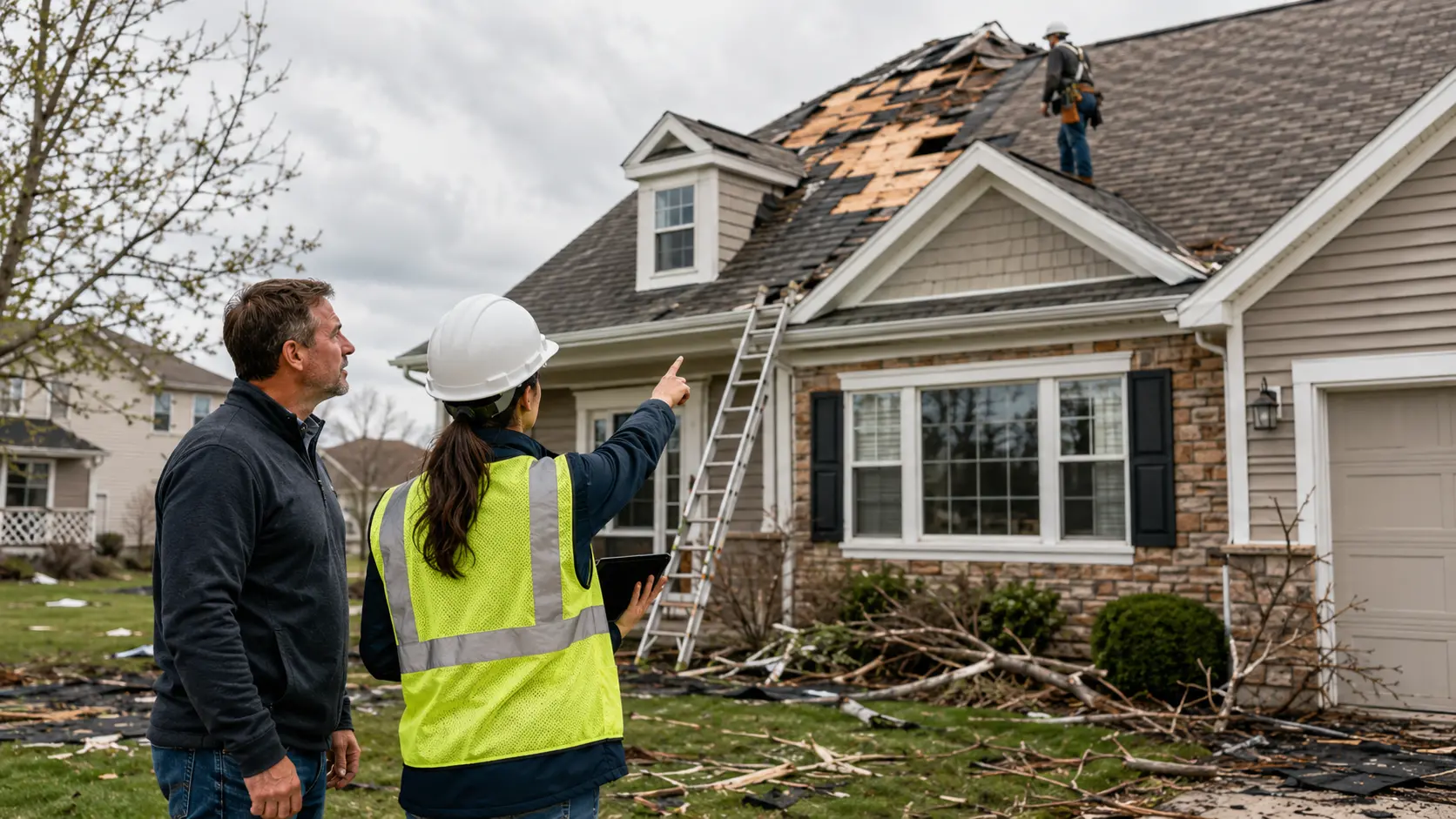
The tornado that struck the Appleton and Menasha area on July 27, 2026, was a local event, but the recovery questions it raised are familiar in communities across the United States. The National Weather Service gave the tornado a preliminary EF-3 rating and estimated peak winds of 140 mph. Appleton officials reported significant storm damage and advised residents to photograph damage before cleanup began.
Those facts make Appleton a useful case study—not because every tornado produces the same damage, but because the first decisions after a wind disaster can affect personal safety, repair costs, and the quality of an insurance claim.
Start With Safety, Not an Insurance Checklist
Do not enter a visibly unstable building simply to take photographs. Watch for downed power lines, gas odors, exposed wiring, broken glass, weakened floors, and damaged trees. Follow instructions from local emergency management, utilities, fire officials, and building inspectors.
Once authorities say the property can be approached safely, take reasonable steps to prevent additional damage. That may include boarding a broken window, covering an exposed section of roof, or moving undamaged belongings away from rain. Keep receipts for materials and emergency services.
Temporary protection is different from permanent reconstruction. Wisconsin’s consumer guidance notes that policyholders should document damage and allow the insurance adjuster an opportunity to inspect before permanent repairs begin. If immediate work is necessary for safety, record the condition before and after the work and retain every invoice.
Build a Damage Record Before Cleanup Changes the Scene
A strong claim starts with a clear record of what happened. Use wide photographs to show the overall condition of the property, then take closer images of individual areas such as:
missing shingles, roof openings, gutters, siding, windows, and doors;
water intrusion, ceiling stains, insulation, drywall, and flooring;
damaged garages, sheds, fences, decks, trees, and landscaping;
vehicles, appliances, furniture, electronics, and other personal property;
debris impact, fallen limbs, and damage to utility connections.
Record video when it helps show the relationship between damaged areas. Make a written inventory of affected items, including approximate age, original cost when known, and replacement estimates. Keep damaged materials when it is safe and practical, especially when an insurer may need to inspect them. If local officials require disposal, photograph the items first.
Create one digital folder for the claim. Save photographs, policy documents, repair estimates, receipts, emails, claim notes, and copies of forms. A simple chronology can also help: note the date of the storm, when damage was discovered, when the insurer was contacted, and what each representative said.
Notify the Insurer and Read the Policy
Report the loss promptly through the insurer’s official claims channel. Ask for the claim number, the assigned adjuster’s contact information, and a written explanation of the next steps.
Then review the policy rather than relying on assumptions. Important questions may include:
Is wind damage covered, and what deductible applies?
Is the wind or named-storm deductible different from the standard deductible?
Does the policy pay actual cash value first and replacement cost after repairs?
Are detached structures, debris removal, trees, code upgrades, or temporary housing covered?
What documentation and deadlines apply?
Does the mortgage company need to endorse claim payments?
Coverage varies by policy and cause of loss. Wind-driven damage and flooding may be treated differently, and ordinary homeowners insurance commonly excludes flood damage. Ask the insurer to explain any limitation, reservation, or denial in writing and identify the policy language supporting it.
When a Public Adjuster May—or May Not—Help
The insurer’s adjuster evaluates the claim for the insurance company. A public adjuster is hired by the policyholder and may assist with documenting damage, preparing estimates, organizing the claim, and negotiating within the scope allowed by state law.
A public adjuster is not automatically necessary after every storm. A homeowner may be able to handle a straightforward claim directly. Professional help may be more useful when:
damage affects several parts of the building or multiple structures;
the contents inventory is large or technically complex;
repair estimates differ substantially;
the claim involves business interruption or extensive temporary living costs;
the homeowner lacks the time or expertise to document a major loss;
a dispute develops over the cause, scope, or value of covered damage.
Before signing, verify the adjuster through the appropriate state insurance regulator. Wisconsin’s Office of the Commissioner of Insurance provides lookup tools for insurance professionals and public adjusters and warns consumers not to sign under pressure after a disaster.
Read the entire contract. Confirm the fee, services, cancellation terms, duration, and what happens if the claim produces no additional payment. Do not assume that hiring a public adjuster guarantees a larger settlement. Also distinguish a public adjuster from a contractor, restoration company, attorney, engineer, or insurance-company adjuster; each has a different role.
Turn the Assessment Into a Repair Plan
An insurance estimate and a construction estimate may organize work differently. The practical goal is to develop a repair scope that identifies all storm-related damage without mixing it with unrelated maintenance or desired upgrades.
For major losses, the team may include a roofing contractor, general contractor, electrician, plumber, structural engineer, arborist, water-remediation company, or building official. Ask each professional to describe the observed damage, proposed work, materials, labor, permits, and price in writing.
Before hiring:
verify licensing or registration requirements with state and local authorities;
ask for proof of liability insurance and workers’ compensation coverage;
obtain more than one written estimate when conditions allow;
check references, complaints, and the company’s physical contact information;
insist on a detailed written contract;
avoid large cash payments, wire transfers, gift cards, or cryptocurrency;
do not sign an insurance check over to a contractor;
use a payment schedule tied to completed work and inspections.
Storm-damaged neighborhoods often attract legitimate repair crews and opportunistic scammers at the same time. The Federal Trade Commission recommends checking credentials and insurance, getting written terms, and avoiding demands for full payment in advance.
Keep the Claim and Construction Records Connected
As repairs proceed, compare the insurer’s estimate with contractor findings. Hidden damage may appear after roofing, siding, drywall, or insulation is removed. If the scope changes, photograph the newly exposed condition and notify the insurer before authorizing significant additional work whenever possible.
Maintain a running list of:
insurer payments and the coverage category for each payment;
deductibles and depreciation;
contractor invoices and change orders;
temporary repair expenses;
additional living expenses;
permits and inspection reports;
communications about supplemental claim requests.
Do not treat an initial estimate as necessarily final, but do not assume every added repair will be covered. Supplemental requests should connect the additional work to documented storm damage and the applicable policy.
If the Claim Stalls or the Numbers Do Not Match
Start by asking the insurer for a written explanation. Identify the specific disputed item: cause of loss, quantity, labor rate, material grade, depreciation, code requirement, or excluded damage. Submit photographs, professional reports, estimates, and receipts that directly address that issue.
If the response remains unclear, use the insurer’s internal escalation process. State insurance regulators can provide consumer information and accept complaints, although they do not rewrite policy terms or decide every factual dispute. Depending on the size and nature of the disagreement, a policyholder may also consider advice from a qualified public adjuster, engineer, accountant, or attorney.
The Broader Lesson From Appleton
Appleton’s recovery illustrates a process that applies well beyond Wisconsin:
Protect people and stabilize the property.
Document before cleanup changes the evidence.
Report the claim promptly and understand the policy.
Separate temporary mitigation from permanent repairs.
Verify every public adjuster and contractor before signing.
Keep the insurance scope, repair scope, receipts, and photographs connected.
Escalate disagreements with specific evidence rather than general frustration.
The location and severity of the next storm will be different. The value of an organized recovery process will not.
This article provides general information, not legal, insurance, engineering, or construction advice. Coverage and professional licensing rules vary by policy and jurisdiction.