
The ink had barely dried on humanity’s first stories before we started arguing about who owned them. From the fiercely protected guilds of medieval scribes to the global treaties governing Hollywood blockbusters, the concept of authorship—that delicate, almost magical bond between a creator and their creation—has been a cornerstone of our culture. But what happens when the author isn’t a person at all, but a ghost in the machine? What happens when our most brilliant new collaborator, artificial intelligence, has a memory stitched together from a billion stolen words?
We’re not talking about some far-off sci-fi scenario. This is the messy, litigious, and profoundly human drama unfolding right now in boardrooms, courtrooms, and on the laptops of countless creators. The generative AI that can conjure a Monet-style landscape or draft a sonnet in seconds didn’t spring into existence fully formed. It learned. And it learned by ingesting a library larger than Alexandria, a corpus of data scraped from the open web: blogs, news articles, digital books, song lyrics, and the collected creative output of millions who never signed a permission slip.
This is the original sin of the generative age. And it has led us to a fascinating and perilous legal precipice.
Let’s imagine Elena, a historical fiction novelist who has spent a decade meticulously researching and writing a trilogy about the Silk Road. Her prose is her fingerprint, a unique blend of historical detail and lyrical metaphor. One day, out of curiosity, she experiments with a new AI writing assistant. She types a simple prompt: “Write a scene about a merchant losing a prize stallion in the Gobi Desert, in the style of Elena Petrova.”
In seconds, the AI produces a paragraph. And it’s… good. Eerily good. It captures her rhythm, her unique vocabulary for describing sand and sky, even a turn of phrase she was particularly proud of from her second book. Elena isn’t flattered; she feels a cold dread. The machine hasn’t just mimicked her; it has dissected her. It has learned her soul by reading her work—work she never gave it permission to use as a textbook. This uncanny valley of creation is where the catastrophe begins.
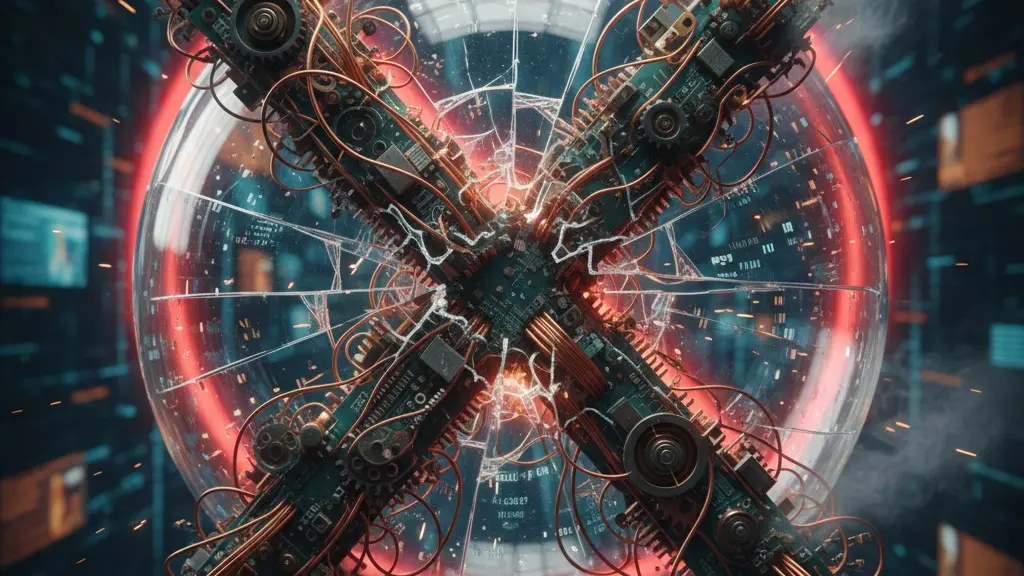
At the heart of the conflict are two competing ideas. On one side, the tech giants argue for “fair use,” a legal doctrine that allows for the limited use of copyrighted material without permission for purposes like commentary, criticism, or research. Training an AI model, they contend, is a transformative act. The AI isn't simply copying Elena’s book; it's learning statistical patterns from it, much like a human student learns by reading thousands of novels. They claim the output is new and original, the digital equivalent of inspiration, not plagiarism.
On the other side, authors, artists, and creators argue this is the most sophisticated act of intellectual property laundering in history. Their position is simple: their work, protected by copyright, was used without consent to build a commercial product that now directly competes with them. That paragraph about the stallion? It exists only because the AI ingested Elena’s copyrighted novels. The training, they argue, isn't fair use; it’s industrial-scale infringement used to build a multi-trillion-dollar industry on the back of uncompensated labor.
The fallout from this clash is a legal labyrinth. Consider the “clause-by-clause catastrophe” of ownership. If Elena uses that AI-generated paragraph in her new book, who owns it? Is it hers, because she guided the machine with her prompt? Is it the AI company’s, as stated in their terms of service? Or does it belong to no one, an uncopyrightable work because it lacks a human author? The U.S. Copyright Office has already weighed in, stating that AI-generated works without sufficient human creative input cannot be copyrighted. Suddenly, creators who use these powerful tools risk creating work that is legally unprotected, free for anyone to use and monetize.
This isn’t just about money; it’s about meaning. The copyright system was designed to incentivize human creativity, to ensure that artists could afford to dedicate their lives to making difficult, beautiful, and challenging things. If an AI can replicate a creator’s unique style on demand, what happens to that incentive? Why spend a decade on a trilogy when a machine can produce a passable imitation in a minute?
We are at a profound inflection point. The law, as is its nature, moves at a glacial pace, while the technology it seeks to govern evolves at the speed of light. Court cases filed by major newspapers, author guilds, and visual artists are slowly wending their way through the system, and their outcomes will shape the creative economy for the next century. Will we decide that all data is fair game for training, creating a world of endlessly remixed, style-mimicking content? Or will we erect legal and financial frameworks that require consent and compensation, treating the data of artists not as a free natural resource to be mined, but as the valuable intellectual property it is?
The ghost in the machine isn't just a writer or an artist; it’s a mirror. It has learned from the vast, chaotic, and brilliant archive of human culture. But in its reflection, we see our own unresolved questions about art, ownership, and what it truly means to create something new. The clause-by-clause catastrophe isn’t just a legal mess; it’s a philosophical one. And as we untangle it, we aren't just writing new laws—we are defining the value of human imagination in the age of its artificial replication.
#artificial intelligence #copyright law #creative economy